 Poštovani,
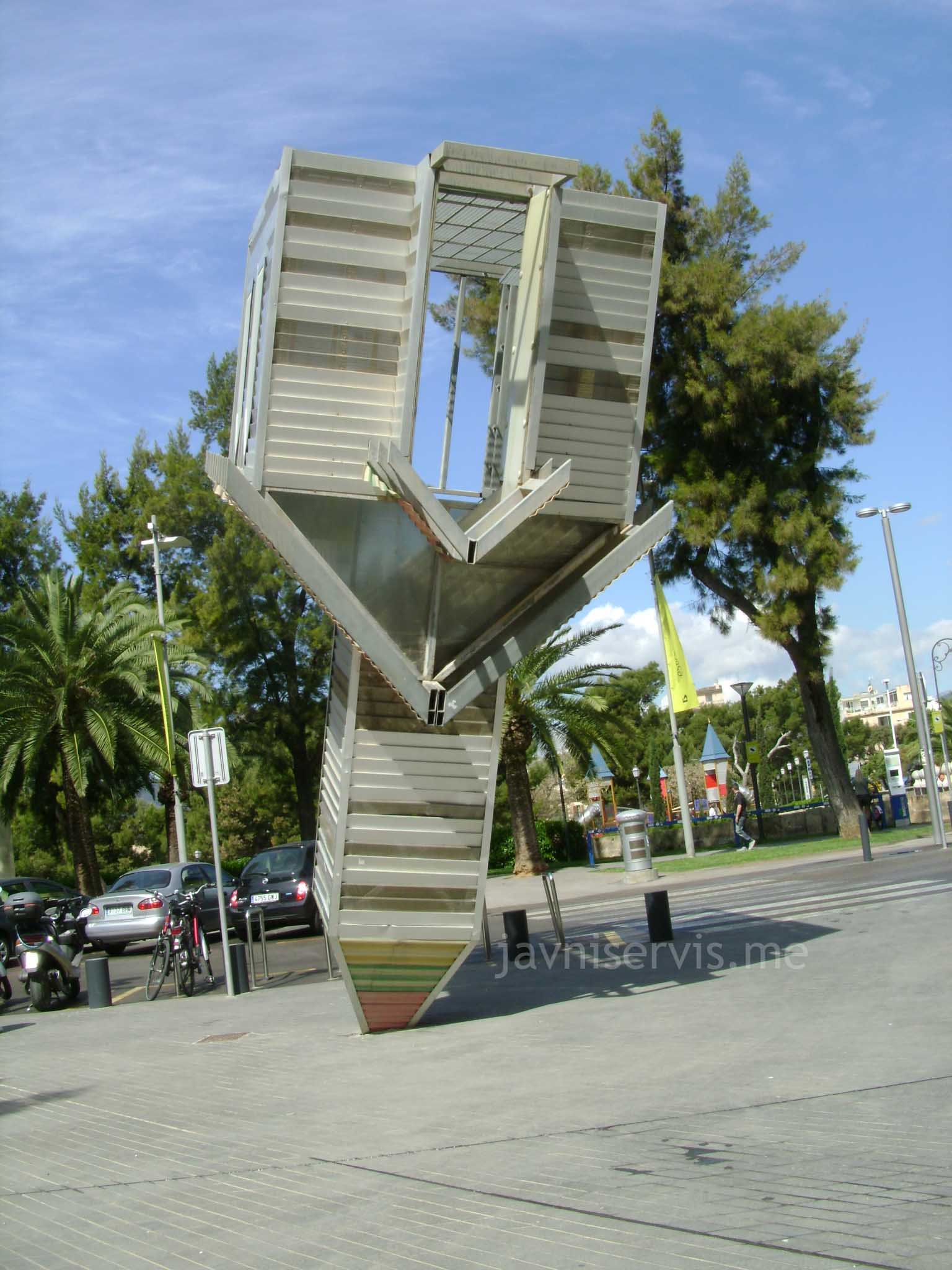
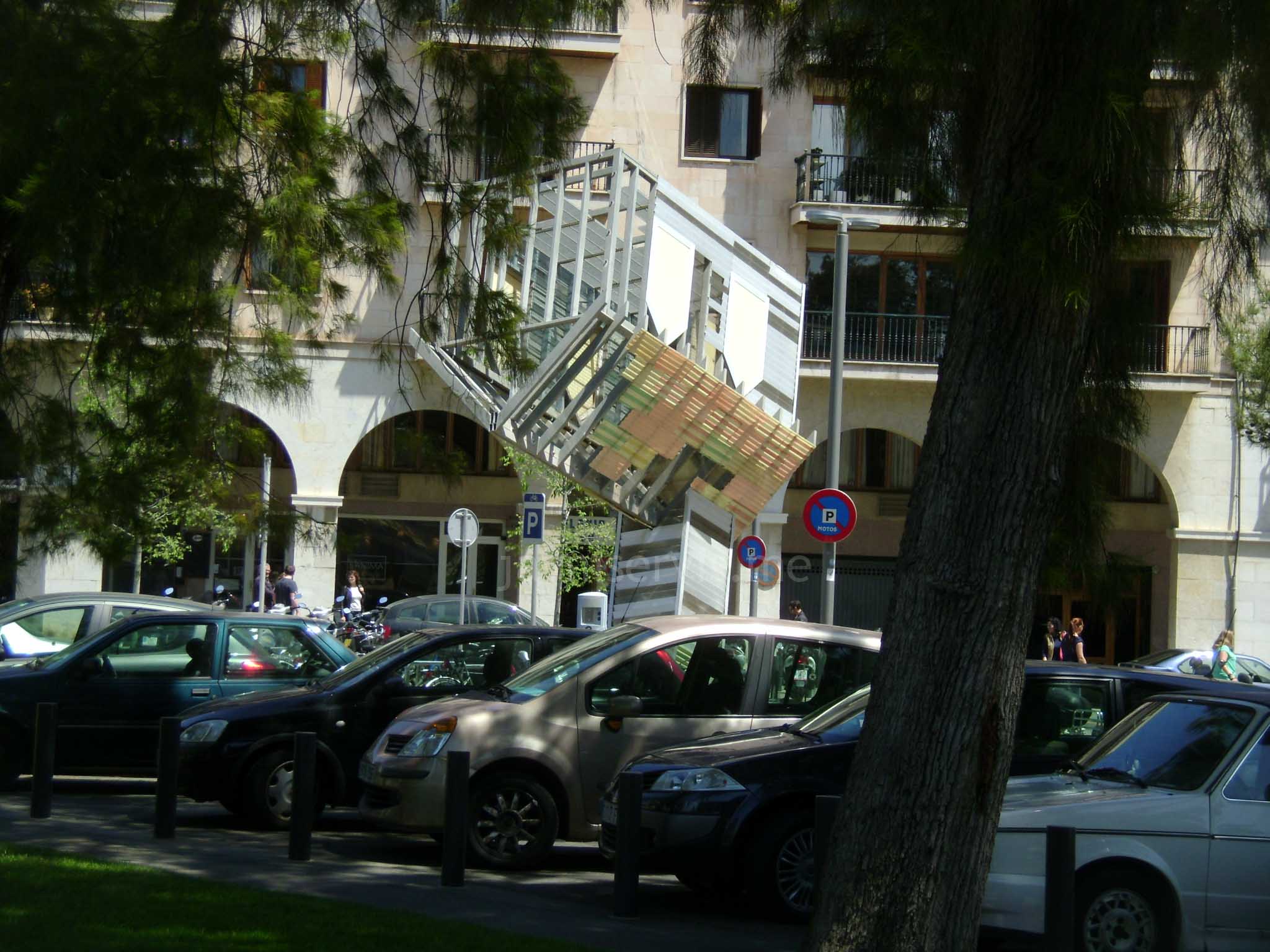
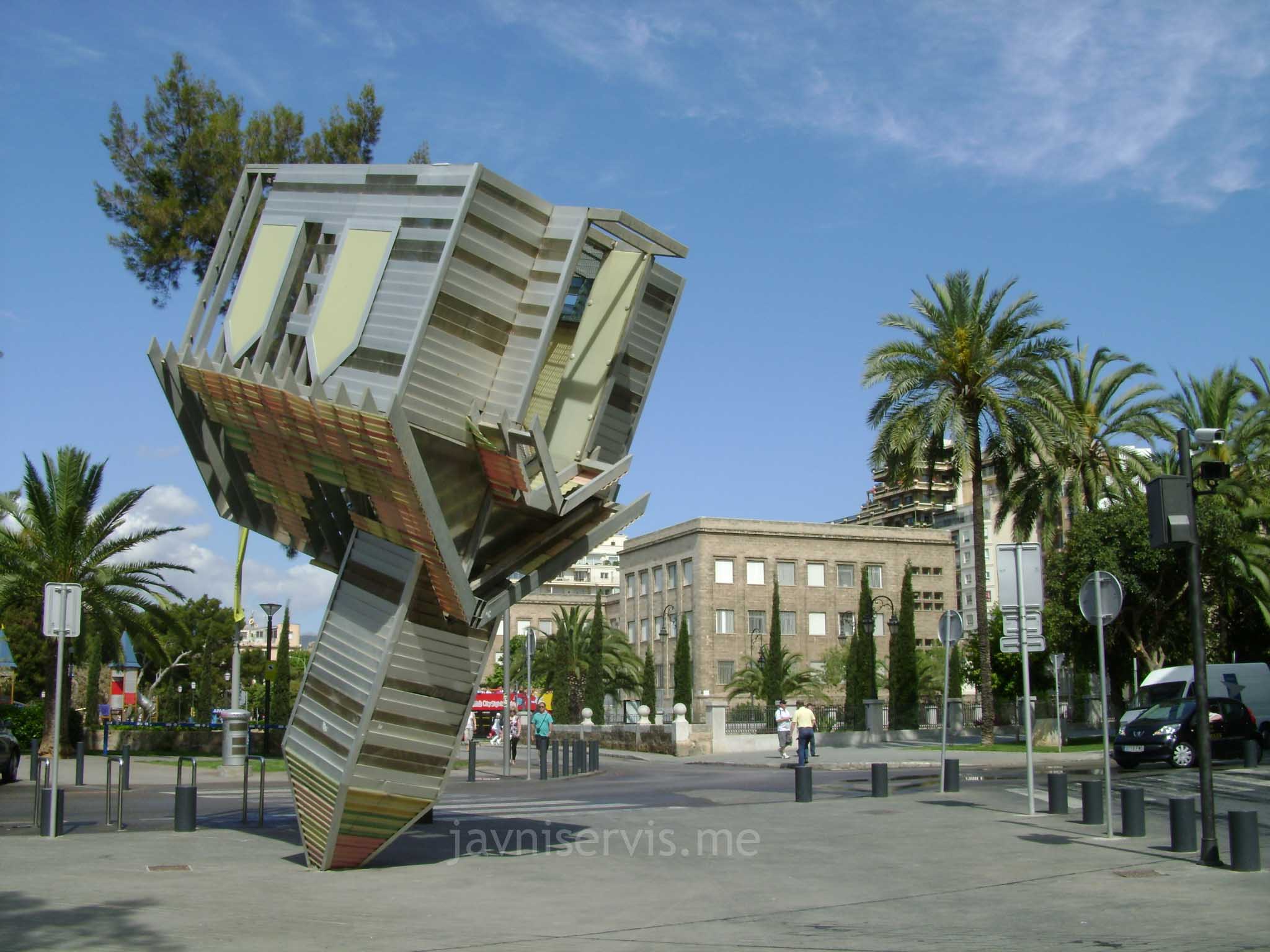
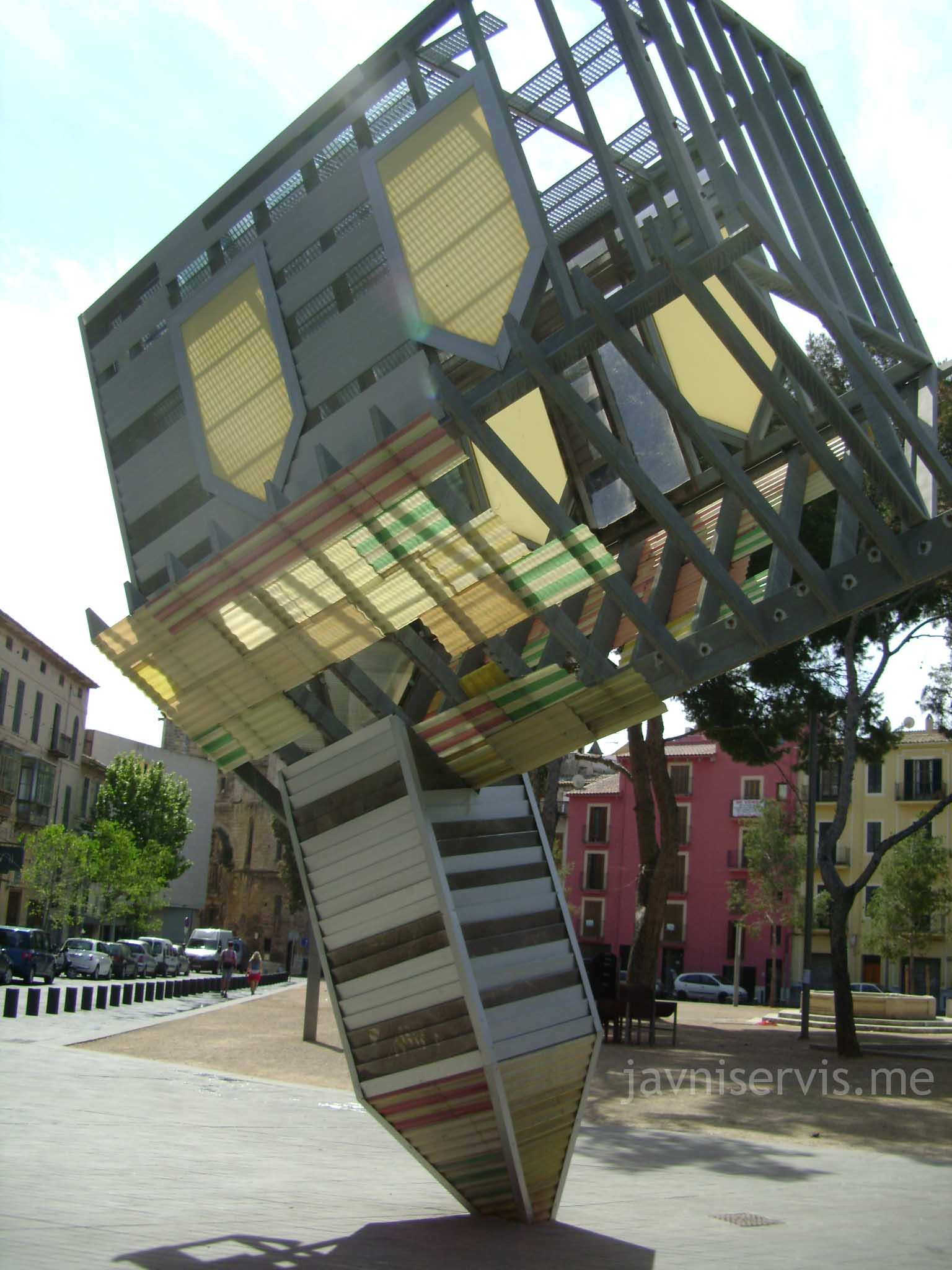
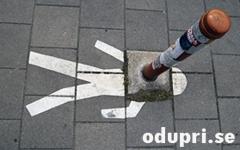
šaljem vam ove fotografje, premda ne znam kako ćete ovo predstaviti(pod uslovom da objavite)… kao „Građani Bara se našli u čudu, još jedna metalna crkva instalirana na sred parkinga?“
Ili ćete ići u pravcu „vjetar odnio metalnu crkvu sa Rumije na Palmu de Majorku?“.
Ili ćete ići „trećim putem“, i nećete zadirati u botizme i SPC poštovaoce JS-a, tako da ćete staviti samo „umjetnička instalacija na Palma de Majorki – inspiracija sa Rumije?“ Kako god, ustupam vam svoje fotografije-instalacije metalne crkve na Palma de Majorka!
Saludando a los servicios públicos!








 javniservis.me
Odlično.
sjajan prilog, odlicna tema! poz. autoru
Polako pokazujete svoje pravo lice… baš sad kad smo krenuli da rušimo režim i kad su protesti u najvećem jeku, vi ste našli da objavljujete ovakve fotografije oskrnavljene crkve, a znali ste da to neće proći bez reakcija. Otvoreno igrate na kartu podjela u društvu, jer vaši šefovi dobro znaju da je to jedina nada za njihov spas od narodnog ujedinjenja i svrgavanje ove višedecenijske napasti koja razjeda Crnu Goru.
Pitam se samo, ima li razlike u “onom” i “ovom” Javnom Servisu. Dok ima ovaca biće i novaca. Ostalo su samo finese…
izvinjavam se na prikazanom mejlu, permutovao sam polje za nadimak i email, trebalo je da stoji nadimak SDS, što naravno ne znači da sam predstavnik srpske demokratske strankem iako sam Srbin – pravoslavac. I naravno da sam svjestan da će odmah početi da pljušte optužbe sa ovog portala kako sam udbaš jer vas napadam, ali to samo može da mi imponuje.
Što ispriča ovaj čovjek? A baš ste bili krenuli i sad ne zainat, ne pa ha… Instalacija je prava. Sve je naopako postavljeno, baš kao kod nas, kao i ovaj komentar iznad.
Lado, nisi mi jasan. Ti si takodje napadao ovaj portal, a sada kada ja to radim argumentovano, ti mene napadaš. Takodje, mislim da si i ti za smjenu vlasti (makar deklarativno je tvoja Pozitivna CG za to) tako da ne znam čemu podržavaš sijanje sjemena zla i razdora medju ljude.
Teško ovom portalu kad ga Lado brani. Gnušam se takvih lažnih akademaca.
hahahaha… a joj… Kako ličiš…
No, dobro. Kao prvo, pošto vidim ima zabune. Ja ovaj portal podržavam od prvog dana. Da ga ne podržavam ne bi komentarisao ovdje, ja kritikujem ono što mi se ne sviđa pa ako se tu i tamo malo pofajtamo, šta ima veze. Drugo, ko su šefovi koje spominješ, kakve crne podjele mogu izazvati ove slike? Ako se neko posprda sa crnogorstvom to je ok i poželjno a ako neko makar i posredno da kritiku jednoj instituciji koja je za mene u istoj ravni sa DPS-om i koja je sve vrijednosti postavila naopačke onda je to sporno!? Zašto ti očekuješ da se Crnogorci posipaju pepelom dok vi nasuprot čak i pojačavate svoju retoriku? Ako se traži kompromis, zajedništvo i sl. ako treba da krenemo jedni ka drugima, onda da se sretnemo na pola puta. Ja neću dalje ni milimetar. Mi smo već stigli a vas nema, ni jednoga.
I once heard a lecture by a wonderful old Zen philosopher, Dr. D. T. Suzuki. He stood up with his hands slowly rubbing his sides and said, “God against man. Man against God. Man against nature. Nature against man. Nature against God. God against nature — very funny religion!” – Joseph Campbell
Ima doktor filozofer po Joseph-u smisao za humor veoma cudan. Posebno za nekog ko se isprobao u raznim religiskim formama. No ce prije bit da je to humor Campbell-a a ne doktora.
D. T. Suzuki was born Teitarō Suzuki in Honda-machi, Kanazawa, Ishikawa Prefecture, the fourth son of physician Ryojun Suzuki. The Buddhist name Daisetsu, meaning “Great Humility”, the kanji of which can also mean “Greatly Clumsy”, was given to him by his Zen master Soen Shaku.[3] Although his birthplace no longer exists, a humble monument marks its location (a tree with a rock at its base). The samurai class into which Suzuki was born declined with the fall of feudalism, which forced Suzuki's mother, a Jodo Shinshu Buddhist, to raise him in impoverished circumstances after his father died. When he became old enough to reflect on his fate in being born into this situation, he began to look for answers in various forms of religion. His naturally sharp and philosophical intellect found difficulty in accepting some of the cosmologies to which he was exposed
A evo natuknice :
Suzuki subscribed to the idea that religions are each a sort of organism, which is (through time) subject to “irritation” and having a capacity to change or evolve.
The shift from a nature religion to a sociological religion makes it difficult for us to link back to nature. But actually all of those cultural symbols are perfectly susceptible to interpretation in terms of the psychological and cosmological systems, if you choose to look at them that way.
Every religion is true one way or another. It is true when understood metaphorically. But when it gets stuck to its own metaphors, interpreting them as facts, then you are in trouble. – Joseph Campbell
This is why clowns and clown religions are helpful. Germanic and Celtic myths are full of clown figures, really grotesque deities. This makes the point, I am not the ultimate image, I am transparent to something. Look through me, through my funny form. – Joseph Campbell
MOYERS: There's a wonderful story in some African tradition of the god who's walking down the road wearing a hat that is colored red on one side and blue on the other side. When the farmers in the field go into the village in the evening, they say, “Did you see that god with the blue hat?” And the others say, “No, no, he had a red hat on.” And they get into a fight.
CAMPBELL: Yes, that's the Nigerian trickster god, Eshu. He makes it even worse by first walking in one direction and then turning around and turning his hat around, too, so that again it will be red or blue. Then when these two chaps get into a fight and are brought before the king for judgment, this trickster god appears, and he says, “It's my fault, I did it, and I meant to do it. Spreading strife is my greatest joy.”
MOYERS: There's a truth in that.
CAMPBELL: There sure is. Heraclitus said strife is the creator of all great things. Something like that may be implicit in this symbolic trickster idea. In our tradition, the serpent in the Garden did the job. Just when everything was fixed and fine, he threw an apple into the picture.
No matter what the system of thought you may have, it can't possibly include boundless life. When you think everything is just that way, the trickster arrives, and it all blows, and you get change and becoming again.
Prava je šteta što ne bi prije sto godina fotoaparata. Nisu mogli da ovjekovječe onu hrpu betona u Morači kod Skalina. Vele da to nekad bješe spomenik ocu “Cara junaka”, Great duke Mirko. Ta fotografija iz decembra 18-te, imala bi veliko simboličko značenje i bila opomena bilo kojem podržavaocu autoritarnih vladara.
Zašto imam osjećaj da Lado piše i pod nikom SDS? Možda zbog ovolikog sarkazma u priči o protestima. Lado, otkud ti u SDS-u? Jesi li ti ove slike poslao redakciji? Odlične su, a govorili ste da nigdje nema metalnih crkava. Eto vidiš da ima.
Sekula, ima crkava metalnih i drugdje, ali mene pogadja sto je ova naopačke, oskrnavljena. To je tobože neka umjetnička instalacija, a u suštini izrugivanje crkvi.
Slazem se sa tobom da je slike možda i sam Lado poslao.
Mada OK, evo da ne pravim vise problem, ne treba biti “bot” ni po pitanju religije, neka vjeruje svako u sta oce. Mozda sam malo prenaglio u svojoj kritici ovog sajta. Ipak ovdje svako moze da napise ono sto zeli, slobodno bez cenzure, a takve stvari treba cijeniti u Crnoj. Izvinjavam se urednistvu ako sam prekoračio.
ma sta te briga Srbine sto je crkva naopako okrenuta.Nije srpska no katolicka,(sv, Catalina Palma de Malorca). Nemoj da brines, ona na Rumiju je stabilna.
Ova dva komentara su lijepa ilustracija kako se lokalni kontekst (sa sve podjelama) “učitava” u slike drugog mjesta i drugog konteksta. Možda nema baš sve veze sa nama, možda nismo toliko bitni?
Nepoznato, nadam se da si se šalio? Po ovome se vidi da si užasan bot (ako si ozbiljan) jer tim “lokalnim” pristupom gdje gledamo samo da je nama dobro, nećemo ništa postići. Zato su i nama Srbima nalepili etikete da nam je uvijek milo da “komšiji crkne krava”. Mene boli svaka naopaka i prevrnuta crkva, nebitno je li pravoslavna ili katolička.
Uostalom, ova sa slike crkva je gotovo ista metalna konstrukcija kao i ova na Rumiji, tako da se ne vidi razlika sem što je ova okrenuta naglavačke.
Meni se u prvi mah učinjelo da je riječ o nekakvom ogromnom javnom toaletu, međutim netom odmah sam shvatio da je riječ o tako veličanstvenoj figuri koja simbolizuje naopakost crkve. NaOPAKOST…kako čudna i tačna igra riječi.
ko nas to Oslobadja? vidi junaka, rodila majka!
Posto odje vidim nema Istoricara Umjetnosti, Ja cu morat se ukljucit jer sam ima priliku da naucim nesto iz te oblasti ko Popaj u onoj Pilot emisiji.
U Simbolickom kontekstu Crkva prestavlja Covjeka.
Sto znaci da je umjetnik moga ladno stavit Covjeka na vr glave djelo mu nebi promijenilo smisao.
Ko sto rece neko gore: OdLicno!
Ovo je glediste sa strane koji nema simbolicke asocijacije lokalnog dnevno politickog karaktera vec posmatra djelo sa univerzalnog stanovista.
The work of R. A. Schwaller de Lubicz constitutes a major breakthrough in our understanding of ancient Egypt. His many years of research in medieval hermeticism and its expression in cathedral architecture led him to the discovery that the very same principles informed the sacred architecture of ancient Egypt.
This insight prompted him to undertake fifteen years of on-site research at Luxor Temple. He measured the entire temple, including every block and inscription, and proved that the plan of the temple was rigorously based upon human proportions and designed to symbolically represent man. Each detail of masonry and symbolic art expresses an element of the Egyptians’ comprehensive knowledge of man's physical and spiritual anatomy. The human being embodied in the geometry of the temple's architecture is Pharaoh, symbolic of the Perfect Man. In Egypt, Pharaoh represented the final stage of man's evolution, his ultimate divinization.
The Temple in Man awakens us to the inevitable resurrection of the spiritual essence of man which has involved itself in matter. This resurrection depends upon the transformation of the material universe and is the sole cosmic goal. Every human birth participates in this alchemy, either in a conscious manner, through the intentional perfecting and manifesting of one's higher nature, or unconsciously, through the tumult and suffering of experience that lead eventually to spiritual self-awareness;the temple in man.
http://www.biogeometry.org/page69.html
The work of R. A. Schwaller de Lubicz constitutes a major breakthrough in our understanding of ancient Egypt. His many years of research in medieval hermeticism and its expression in cathedral architecture led him to the discovery that the very same principles informed the sacred architecture of ancient Egypt.
This insight prompted him to undertake fifteen years of on-site research at Luxor Temple. He measured the entire temple, including every block and inscription, and proved that the plan of the temple was rigorously based upon human proportions and designed to symbolically represent man. Each detail of masonry and symbolic art expresses an element of the Egyptians’ comprehensive knowledge of man's physical and spiritual anatomy. The human being embodied in the geometry of the temple's architecture is Pharaoh, symbolic of the Perfect Man. In Egypt, Pharaoh represented the final stage of man's evolution, his ultimate divinization.
The Temple in Man awakens us to the inevitable resurrection of the spiritual essence of man which has involved itself in matter. This resurrection depends upon the transformation of the material universe and is the sole cosmic goal. Every human birth participates in this alchemy, either in a conscious manner, through the intentional perfecting and manifesting of one's higher nature, or unconsciously, through the tumult and suffering of experience that lead eventually to spiritual self-awareness;the temple in man.
In Schwaller de Lubicz's scrupulous examination of the art and architecture of the Temple of Luxor, at least two concurrent levels are being developed at any given point. One is the study of Egypt as a civilization that existed in a factual geographic place and time (including its people, mythology, social forms, its chronological unfolding, its monuments and artifacts), but this level is only a backdrop, or support, for another Egypt which might be defined as a “quality of intelligence.” This is Egypt as an evocation of a particular utilization and expression of a universal power of higher intellection. This Egypt is outside of chronological considerations; it is, rather, both an ever present and a recurring possibility of consciousness. In his approach to Egypt, Schwaller de Lubicz stresses the view that in order to comprehend the significance of a heightened phase among man's varied historical expressions, we need to impose on ourselves the discipline of attempting to enter into the mentality of the people and the spirit of the time. To do so would mean more than just learning the language and symbols of the period under study; we must also awaken in ourselves a living inner rapport with the material being researched and identify with it in a potentially self-transforming manner. Of course, this ideal can never be fully attained, as our present consciousness is inevitably with us, but, on the other hand, by continuing to sift all of history through our present rationalized, individualized psychological mentality, we distort beyond recognition the content and meaning of the past. This distortion often occurs when we try lo interpret the great mythological cultures of Egypt or Vedic India in particular; we tend to lose sight of the fact that these cultures were expressing a different mentality, and values, from ours and that they had a completely different understanding of the goal and purpose of life. As a result, in all of their science, art, and knowledge these cultures used distinct modes and methods of symbolization.
Schwaller de Lubicz found it necessary to inquire into the nature of symbolization itself in order even to arrive at an understanding of what a heiroglyph is. This he carried out in two small books, Propos sur Esoterisme el Symbole (Esotericism and Symbol) and Symbole et Symbolique (The Symbol and the Symbolic) – R.A. Schwaller de Lubicz, The Temple in Man (Sacred Architecture and the Perfect Man)
Device To Root Out Evil
http://www2.canada.com/calgaryherald/news/story.html?id=f515c5c3-4c25-4992-a24f-d6abc0fe30ae
That these ancient peoples thought differently than we do – and that we must understand this difference if we are to study them properly – seems obvious, but an example will show how difficult ii is to put this idea into practice. Schwaller de Lubicz explains in Le Temple de I'Homme (Caractercs, 1957) that in the ancient temple civilization of Egypt, numbers, our most ancient form of symbol, did not simply designate quantities but instead were considered to be concrete definitions of energetic formative principles of nature. The Egyptians called these energetic principles Neters a word which is conventionally rendered as “gods.”
“In considering the esoteric meaning of Number, we must avoid the following mistake: Two is not One and One; it is not a composite. It is the multiplying Work; it is the notion of the plus in relation to the minus; it is a new Unity; it is sexuality; it is the origin of Nature, Physis, the Neter Two. It is the Culmination (the separating moment of the full moon, for example); it is the line, the stick, movement, the way, Wotan, Odin, the Meter Thoth, Mercury, Spirit.”
Also, when the ancients considered the process of mathematical multiplication, their mode of calculation had a direct relationship with natural life processes as well as metaphysical ones. Schwaller de Lubicz called this mode the “principle of the crossing” (interestingly, we today continue to symbolize multiplication with the sign of a cross: X). This crossing was not a sterile, mental, numerical manipulation but a symbol for the process by which things enter into corporeal existence. All birth into nature requires a crossing of opposites. It can be the crossing of vertical and horizontal lines, which give birth to the square, the first measurable surface; or male and female, giving birth to a new individual; or warp and weft, creating a fabric; or light and darkness, giving birth to tangible forms; or matter and spirit, giving birth to life itself. Thus the vital linking up of the mental abstraction of calculation with its counterpart in natural phenomena gave the ancient mathematician a living and philosophic basis for his science. – R.A. Schwaller de Lubicz, The Temple in Man (Sacred Architecture and the Perfect Man)
The Egyptian symbolism can guide us in this regard and show us meanings other than the common meanings currently accepted for a great many words. In this way, the meaning of many texts will become clear.
Rationalism is based on the data provided by the senses, and the senses perceive only a meager part of what is. Thus, through rationalism alone we can know only what is encountered through the senses, what is ponderable, quantitative. Yet mathematics have demonstrated the existence of elements that fall outside the physical; we must take this into account, and if rationalism brings us up against an impenetrable wall, in so doing it in fact teaches us that it has its limits and that we should seek another means of knowledge.
We express ourselves in a conventional language, and the dictionary defines and limits the meaning of each word. Therefore, we can understand nothing beyond what the dictionary knows. We write with conventional alphabetic signs that in themselves express only sounds; thus our alphabet is merely a mechanical means for composing the words in the dictionary and transmitting the thoughts they encompass. It may be said that the combinations of these letters are almost infinite: true, but the number of words is limited by notions already acquired. Thought can also examine observed phenomena and seek the causes… Certainly it can, but as soon as it approaches the metaphysical, it can no longer find in our languages and forms of writing the means of expressing itself: abstract ideas, formulated in words for which we lack the concepts, are objectified and lose their significance. – R.A. Schwaller de Lubicz, The Temple in Man (Sacred Architecture and the Perfect Man)
It follows from these observations that either there exists only a concrete world perceptible to the senses, or we lack a faculty that would enable us to grasp the abstract, without having to concretize through the imagination. The process is ingrained in us, in accordance with a mode that always leads toward the quantitative definition. This is the inverse of the Egyptian mentality.
If an unknown phenomenon appears, it is already the concretization of a cause that was abstract for us. Instead of searching out the nature of this cause, we obey our reductionist tendency and restrict both cause and phenomenon to the realm of the mechanical mentality. We investigate nothing deeply; we pull everything down to our own limits. However, a simple image proves to us that there is a way we can express ourselves without limiting a notion to a defined form, and transcribe our thought without imposing our own mentality on those who will read this image. We have gotten into the habit of reducing everything in Time and Space: this is the rational habit. An image, on the other hand, gives access to a world of qualities and functions. For instance, if we say “a man walks,” we see a man walking, but we see him in a limited way: we imagine only the fact of moving or walking. We can then place that fact in the past, present, or future and all the gradations of these tenses; we situate this movement in Time and Space. If, on the other hand, we see an image that represents a man walking (or simply lines depicting a man) we no longer imagine him, we no longer situate him; he is there, it is the function that interests us, and the quality of that function. We can then paint this man green: it will no longer be solely the function of walking with one's legs that is evoked—this movement could also signify vegetation or growth. But to our reason, walking and growing are two different functions, while in reality there is an abstract connection between them: it is movement outside consideration of Time, or pathway, or specific direction.
If we wish to define this movement, we immediately reduce it in Time and Space, whereas there is no further need to define the feeling of motion (whether walking or growing); the image—the symbol—acts as definition, and we can in fact experience this condition (unconsciously become one with it, without any reasoning) just as any child would looking at pictures. – R.A. Schwaller de Lubicz, The Temple in Man (Sacred Architecture and the Perfect Man)
Kako Lado zapodjenu pricu sam sa sobom! Ovo je stvarno smjesno)))) Svi se pitate kako ja to znam! Pa ja sam mu gazda,a to je prekomoracki kratkonogi gonich koji je nastao od momisihcke pudlice i niksickog terijera. Lado ,LADO KUKU ,KUKU))
Shefe, što se radi u Udruženju Pčelara? Vrca li se med? Vidim naučio si da koristiš tastaturu… fino, fino… hahahahaha…
Oooo…..) aport!
Hombre, čujem da kad si poša’ u penziju da si upisao kurs za kompjutere. Pametno. Evo ti jedan savjet, pođeš mišem na lijevi donji ugao gdje piše start, jel ga vidiš? Aooo… to zeleno polje. E to. Pa ti se otvori meni i ti pođeš mišem sad na all programs. E to, to… Sad ti se otvorio taj meni sa strane. Tamo nađeš games. Pa ti se otvori još jedan meni. Jel vidiš, a? Čudo ti je današnja tehnika. E kad si dotle došao klikni na solitaire. To ti je pasijans. Igraš i uživaš, ka’ nekad u radno vrijeme. Divota. hahahahah…
nijesu umjetnici popecili crkvu na percin, bez obzira na gradjevinski materijal, no popovi. zbog toga ce popovi, a ne umjetnici, da mekecu, kad budu duse ispustali.
A ti si toboze krsten, i ides rediovno u crkvu, pa ti popovi pokvarise ugodjaj?
Ajde odmori malo, “druze komesare”!
ps. Da li bi ovim gr(a)djanima sa javneSprdnje crkva na Rumiji bila prihvatljivija, ako bi je ookrenuli naopacke? Znate vi cijenu svacemu, ali vrijednost nicemu! Tako vam se i vraca!
mene su krstili kad se nije cekalo ni sekunde da se udje u ostrog, od kad su se namnozile pogani u mantijama, nista nije isto.
zalosno je, kurcilo praznoglavilo a mnogorjecilo, zalosno je sto ste vi, vizardov azijatluk, jedina snaga koja moze da naudi atili. oci povadili, da Bog da!
Aport…Bravo.bravo dobr pas… Kad ga gazda zovne on dodje.Vazda si bio dobar pas za pchele. Posto su zakonom kao stoka zavedeni pa mi samo treba choban da mi ih prebroji.Ako znash kakvog brojacha dobrog moze i sa protesta radno da iskustvo imati.(MUP,SUP,UDBA).)? Penzija,kompjuter, . . .) stvarno si zasluzio naziv legendarni Lado))) ali stvarno. . . . . . )))))) izvuci komentare moje koje sam pisao pa ces vidjeti.Ja sam terenac nikad u kancelariju nijesam ushao osim kad sam tebe iz azila za pse usvojio.Sto ce biti u glasu Chepuraka shutra?! Ajde prolaj(prichaj) pa na spavanje.
Ja da ti pomognem kako lakše da se oslobodiš stresa a ti vrijeđaš. Jel’ to lijepo? Jel’ to fino? A nije brate. Ajde sad se fino izvini pa ću da ti otkrijem još koju caku. I ne lupaj po toj tastaturi toliko pa svako malo moraš uzimati novu. Nježno, nije ti to sjekira :-) hahahaha…
Napokon moj vjerni pas je upravu!!Pa da shekira,motika,njiva i pas(Lado)koji laje na portalu,a ne ujeda.Pravi domacin. Gazda.Sam svoj.Sto sam posijao rezimu to sam poznjeo.Dali ste mi slobodu i dobrovoljno izgnanstvo ali odje u Cg.)) Visha me sila cera da ostanem tj. ljubav prema dzukelama rezimskim i profiterovim da ih vezem za sebe i oko sebe pa da im tepam i aportujem!) To mi je inace glavni hobi. Kako si samo ti dobar morao sam te zavezat na ovaj portal!!) aport Lado…aport!!
Ček. Zar ti nisi onaj koji je nudio usluge ne jednom portalu pa ti tamo, cijeneći tvoje intelektualne sposobnosti, rekoše ti po Ladu ka’ po pranju, ajd na njega kao na pun mjesec… hahahaha… a joj. pa jeste… auuu… a nije ti to udruženje pčelara pa da možeš izaći kad hoćeš :-) :-) :-) Mada meni si simpatičan takav kad se punih usta ispljuješ i ispsuješ. Dobro je izbaciti toliku frustraciju. Zamisli da držiš to u sebi. Pa ti bi eksplodirao hahahaha… a ima te Boga mi nije da nije hahahaha… a koji lik. Sad se sjetih hahahah… Strašno :-)
E s kim ti Lado diskutuješ, ccc… :-) , što te nađe. Svijet je ovaj tirjan tirjaninu a kamoli Ladu blagorodnom :-)
Aport!Aport!! )))ha,ha,ha,aport Lado,aport….ha,ha,ha
Tumble with the rock which falls from the mountain.
Seek light and rejoice with the rosebud about to open:
labor with the parsimonious ant;
gather honey with the bee;
expand in space with the ripening fruit.
– R.A. Schwaller de Lubicz
Mi smo se vec poklali, a jesmo li sigurni da je ovo crkva? Gdje je krst? Jeste da lici, ali bez krsta nije crkva, n'est-ce pas? Spanija je to, majka Inkvizicije, srbogorci, mirno spavajte ;)
Srbogorci+Milogorci= Prolivgorci i njihov potparol Lado Tajovic